
On this page
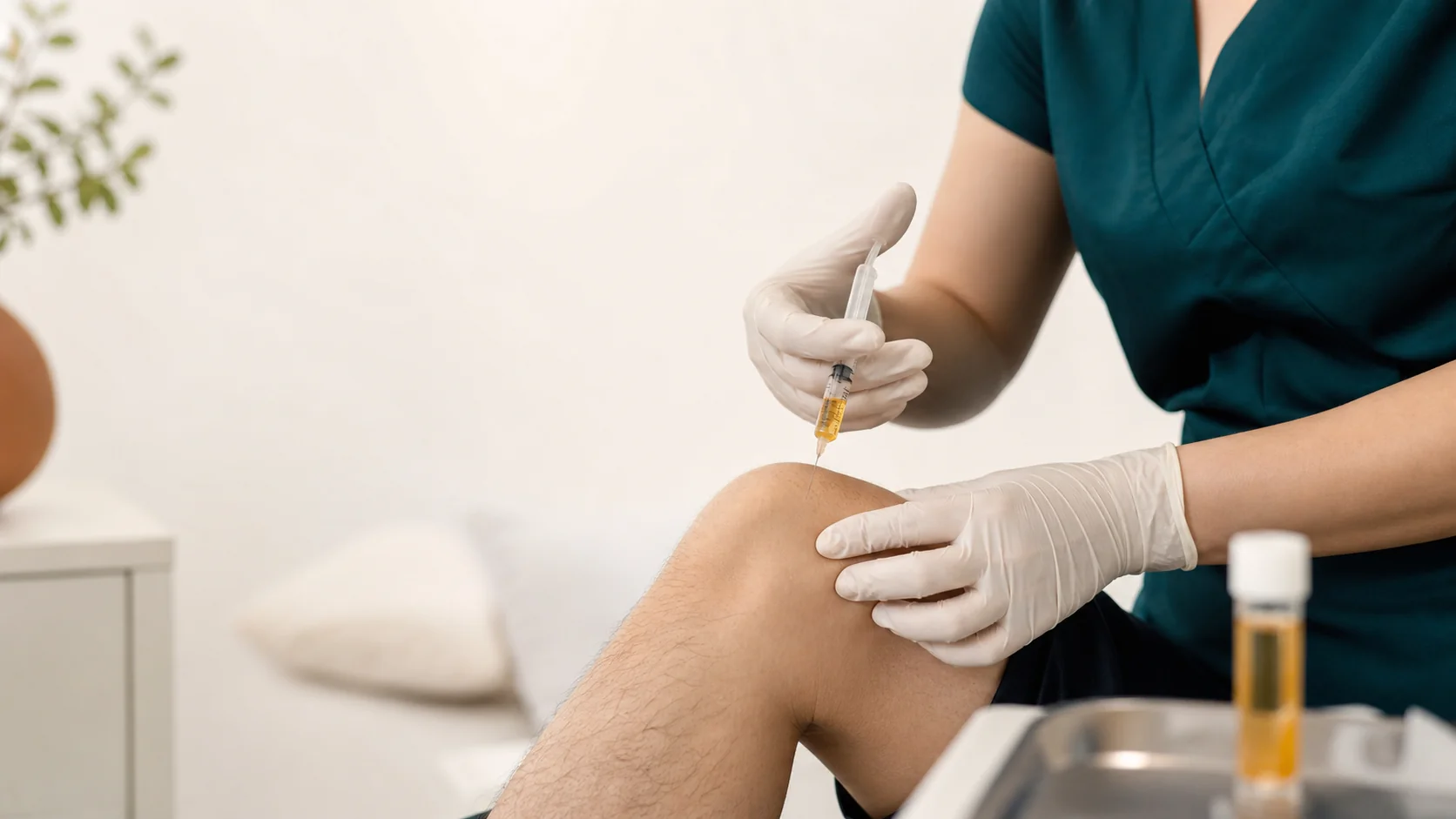
PRP therapy in St. Louis uses a concentrated portion of your own blood, rich in platelets and growth factors, to support the body’s repair response inside injured tissue. It may be considered for knee pain, joint pain, osteoarthritis, and chronic tendon irritation when rest alone has not resolved the problem.
For many active adults, PRP therapy in St. Louis becomes part of the conversation when joint pain, tendon irritation, or soft tissue strain keeps coming back after rest, medication, or activity changes. Pain can feel simple at first, but the problem underneath may involve irritated cartilage, strained connective tissue, or a healing response that has slowed down.
At St. Louis Pain Center, we look at pain through that deeper lens. The goal is to understand what your body is trying to recover from, then discuss options that may help you move with more comfort and confidence.
Why Some Injuries Keep Coming Back
When you strain a tendon, irritate a joint, or overload soft tissue, your body starts a repair response. Blood flow, platelets, immune cells, and growth factors all help organize that process.
In some cases, the response doesn't move forward as cleanly as expected. Tendons have limited circulation. Cartilage has very little direct blood supply. Repeated stress can also keep a joint sensitive long after the first injury.
That is why a knee, shoulder, elbow, or hip can still feel stiff or painful even after you have rested. The outside may look normal, while the deeper structures are still dealing with irritation and reduced resilience.
The Science Behind Platelet-Rich Plasma Therapy
PRP therapy uses a concentrated portion of your own blood. A small blood sample is drawn and processed so the plasma contains a higher level of platelets. That prepared plasma is then placed into the affected site.
Platelets are known for helping blood clot, but they also carry growth factors and signaling proteins, the mechanism described in the AAOS overview of platelet-rich plasma treatment. These substances help direct the body's natural response after damage. In simple terms, PRP is designed to bring a stronger concentration of those signals to a specific spot that needs attention.
This is one reason PRP injections in St. Louis may be discussed for knee pain, joint pain, osteoarthritis, or chronic tendon irritation. The treatment is designed to improve the local environment where recovery has been limited, using concentrated platelets to encourage a more active healing response in the targeted area.
Growth Factors and Cellular Signaling
Growth factors work like instructions for nearby cells. They can influence collagen formation, local remodeling, and other steps involved in tissue health.
This can be especially relevant for tendons and ligaments because they depend on organized collagen to tolerate movement, pressure, and daily activity. When the goal is to help a strained structure respond more effectively, concentrated platelets may be part of the discussion.
Joint Irritation and Movement Sensitivity
Joint pain is often tied to more than one factor. Cartilage stress, inflammation, fluid changes, and altered movement patterns can all contribute to discomfort.
With platelet-rich plasma therapy, the focus is on the biological environment inside the joint or soft tissue region. For some patients, that may fit into a broader plan aimed at improving function, reducing reliance on short-term relief, and delaying more invasive options when appropriate.
Tendons, Ligaments, and Overuse Patterns
Tendon and ligament problems often take longer to settle than muscle soreness. These structures don't receive the same rich blood supply as muscle, so healing can be slower.
That is why concerns such as tennis elbow, jumper's knee, rotator cuff irritation, and other overuse injuries can linger. PRP may be considered when pain keeps returning in a focused location and basic self-care has not been enough.
Why Local Patients Consider PRP Care Near Telegraph Road
Patients across South County, Oakville, Mehlville, Affton, and nearby St. Louis neighborhoods often want a practical answer: Is this something they can manage conservatively, or does it need a more structured plan?
Our office at 4455 Telegraph Rd #250, St. Louis, MO, is convenient for patients coming from I-255, Lindbergh Boulevard, and communities near the Mississippi River corridor. For people balancing work, family, and activity, access can make follow-through easier.
At St. Louis Pain Center, PRP therapy is considered within the bigger picture. We look at where the pain is coming from, how long it has been present, what movements make it worse, and whether other services may be relevant.
A patient with knee arthritis needs a different conversation than someone with a tendon injury from lifting, running, or recreational sports. The recommendation should follow the diagnosis, not the other way around.
What to Expect During a PRP Visit
A PRP visit is usually more structured than many patients expect. It's not simply an injection appointment. The provider first needs to understand the painful region and decide whether this option makes sense for your situation.
Your visit may include a review of:
- Where symptoms started and how they have changed
- Prior injuries, imaging, or diagnoses
- Current medications and health history
- Movements that create pain, weakness, or stiffness
- Whether joint, tendon, or soft tissue involvement appears likely
If PRP injections in St. Louis are appropriate, the process includes drawing your blood, preparing the platelet-rich plasma, and placing it into the target site. Guidance after the visit can vary depending on the body part treated and the reason for care.
Many patients want to understand what the timeline may look like. With PRP, changes often develop gradually as the body responds to the concentrated platelets and the targeted healing process becomes more active over time.
When PRP May Be Worth Discussing
PRP may be worth discussing if pain keeps returning in the same joint, tendon, or soft tissue region. It may also be considered when symptoms limit your routine and you want to understand options beyond repeated medication use or surgery.
Common reasons patients ask about PRP injections include knee pain, osteoarthritis, joint discomfort, chronic tendon irritation, and soft tissue injuries. The right next step is still an evaluation, because similar symptoms can come from different causes.
At St. Louis Pain Center, the care plan is shaped around the person in front of us. Your activity level, health history, goals, and exam findings all help guide the recommendation.
Moving Forward With PRP Therapy in St. Louis
PRP therapy in St. Louis may be worth considering when pain keeps interrupting daily movement and the affected tissue needs more than rest alone. This approach uses concentrated platelets from your own blood to encourage a more active healing response in the targeted region.
If joint pain, tendon irritation, or soft tissue strain is making it harder to stay active, schedule an appointment with St. Louis Pain Center to discuss whether PRP fits your needs.
Ready to take the next step?
Talk with our South County team about a drug-free, surgery-free plan built around the cause of your pain. The first consultation and screening are complimentary.
Browse all related care →