
On this page
A first PRP appointment at St. Louis Pain Center is mostly evaluation. Your provider reviews your symptom history and any imaging, confirms PRP is appropriate, then draws a small blood sample, concentrates the platelets in a centrifuge, and injects the preparation into the treated area, often with imaging guidance. Improvement develops gradually rather than immediately, and follow-up visits track function, not just pain scores.
If you have booked platelet-rich plasma treatment and are not sure what the visit involves, you are asking a reasonable question. Most people picture a single injection and little else. In practice, a first PRP therapy appointment at St. Louis Pain Center is mostly evaluation, and the injection itself is one of the shorter parts of the day.
This walks through the appointment in order, so you know what is coming and what to ask.
Before Anything Else, the Provider Confirms PRP Is the Right Tool
The first part of the visit is diagnostic, not procedural. Similar symptoms come from very different problems, and PRP therapy is not a general-purpose treatment for all of them.
Expect a review of when symptoms started, what makes them worse, previous injuries, any imaging you have had, and your current medications. Your provider is trying to establish whether the pain is coming from tendon, ligament, cartilage, or joint tissue, and whether that tissue is a plausible candidate for a biologic injection.
Knee osteoarthritis is one of the conditions patients most often ask about, and NIAMS describes it as a progressive breakdown of joint cartilage. Whether a biologic injection is sensible for it depends on how far that process has gone, which is a question the exam and imaging answer, not the booking form.
The American Academy of Orthopaedic Surgeons notes that platelet-rich plasma preparations vary and that research is still clarifying which conditions respond best. That is exactly why the evaluation matters more than the injection: the honest answer for some patients is that a different approach fits better.
Bring These to the Appointment
Coming prepared shortens the visit considerably:
- A short timeline of when the pain began and how it has changed
- Any imaging reports or discs, especially recent X-rays or MRI
- A current medication list, including anti-inflammatories and supplements
- The specific movements or activities that reproduce the pain
- What you actually want to get back to doing
That last one shapes the plan more than people expect. Returning to yard work and returning to recreational running are different targets.
The Blood Draw and Processing Step
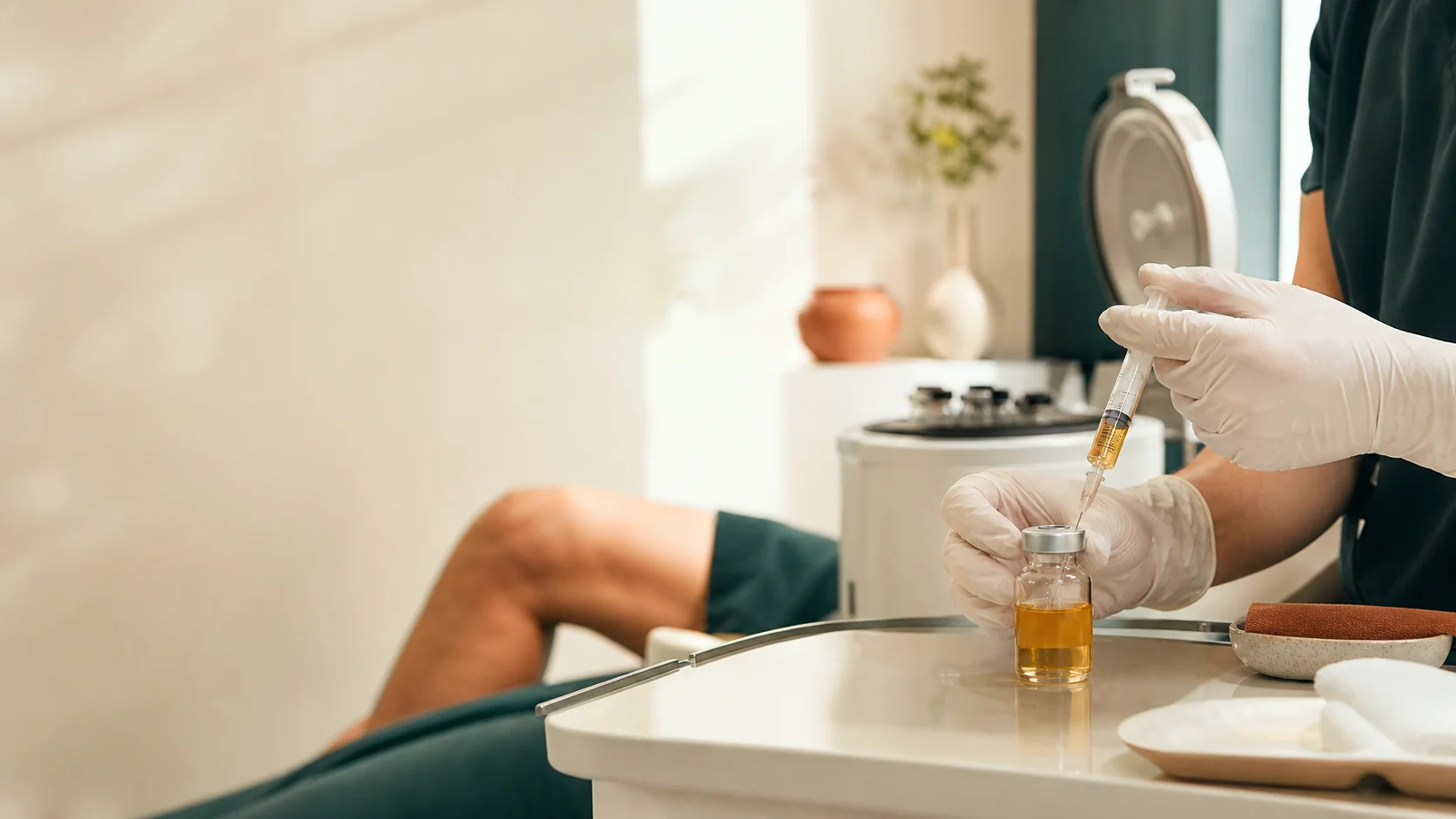
If PRP is appropriate, the procedural part begins with a standard blood draw, similar in volume to routine lab work.
That sample goes into a centrifuge, which spins it to separate the components by density and concentrate the platelet-rich portion of the plasma. This takes a number of minutes, and you wait in the office while it runs. It is an unremarkable stretch of the appointment, but it is the step that makes the treatment possible.
Nothing is added from a donor or an outside source. The preparation is made from your own blood, which is the reason the approach is described as autologous.
The Injection Itself
The concentrated preparation is then injected into the treated area, frequently using ultrasound or another form of imaging guidance so the placement is precise.
Precision matters here more than it does with a broad anti-inflammatory. The goal is to deliver the preparation into a specific structure, so guidance is a quality-of-care question, not an upsell.
Most people describe pressure and some discomfort during and shortly after the injection. Your provider will tell you what sensation is expected for the specific area being treated.
The Part Most People Are Unprepared For: The Timeline
This is the single most common source of disappointment, and it is worth being direct about.
PRP does not work like a cortisone injection. A corticosteroid can reduce inflammation quickly. PRP is intended to support a repair process, and repair takes time. Changes typically develop gradually over weeks rather than appearing the next morning.
That also means the first days can feel unimpressive, or even slightly more sore than before. Your provider will give you specific activity guidance for the treated area, including what to avoid and for how long, since the answer differs between a knee joint and an elbow tendon.
Tendon and ligament problems in particular tend to resolve slowly. The National Institute of Arthritis and Musculoskeletal and Skin Diseases notes that sports injuries involving these tissues often require extended recovery, which is consistent with what patients experience after a biologic injection.
Follow-Up and Whether You Need More Than One
You should expect a follow-up rather than a single appointment and no further contact.
At that visit, your provider is looking at function as much as pain: what you can do now that you could not before, how far you walk, whether stairs have changed, whether you are sleeping through the night. Those markers say more about tissue response than a pain score alone.
Depending on the area treated and how you respond, additional injections or complementary care may be discussed. That decision should follow your actual progress, not a predetermined package.
Practical Details for South County Patients
St. Louis Pain Center is located at 4455 Telegraph Rd #250, St. Louis, MO, which keeps the visit manageable for patients coming from Oakville, Mehlville, Affton, and the surrounding South County area.
Because PRP involves a blood draw, a processing wait, and post-injection guidance, plan for a longer appointment than a routine office visit. Arranging a ride is worth considering depending on which area is being treated, and your office can tell you in advance whether that applies to you.
Frequently Asked Questions
How long does a PRP appointment take?
Longer than a standard office visit. The evaluation, the blood draw, the centrifuge processing time, the injection, and post-procedure instructions all happen in the same appointment. Ask the office for the current estimate when you book, since it varies by the area being treated.
Does the PRP injection hurt?
Most patients report pressure and some discomfort during the injection, and soreness for a period afterward. The specific sensation depends on which structure is treated. Your provider will describe what is expected for your area before beginning.
How soon will I notice a difference?
Not immediately. PRP is intended to support a gradual repair response, so changes typically develop over weeks. Feeling no different, or slightly more sore, in the first days after the injection is common and does not indicate the treatment failed.
Can I go back to normal activity right away?
You will receive specific activity guidance, and it differs by treated area. Some restrictions are short. Others last longer, particularly for tendons and ligaments, which recover more slowly than muscle.
Will I need more than one injection?
Possibly. That is determined at follow-up based on how your symptoms and function actually respond, rather than being decided in advance. Your provider will discuss whether an additional injection is likely to add benefit in your case.
Booking a PRP Evaluation in St. Louis
If joint pain, tendon irritation, or a soft tissue injury keeps returning and you want to know whether PRP is a reasonable option for it, the next step is an evaluation rather than a procedure.
Schedule an appointment with St. Louis Pain Center and we will tell you honestly whether PRP therapy fits your condition, or whether something else fits better.
Ready to take the next step?
Talk with our South County team about a drug-free, surgery-free plan built around the cause of your pain. The first consultation and screening are complimentary.
Browse all related care →